
Gallic acid monohydrate didn’t pop up yesterday. This compound has traveled from natural history to lab bench—a vivid thread running through generations of scientific discovery. Traditional extracts from plants like gallnuts gave early chemists and apothecaries their first encounter with this crystalline powder. These days, it anchors modern research and is a regular in labs worldwide. For those who track the chronic march of chemistry through time, gallic acid shows a real link between herbal wisdom and the age of structure-activity relationships, a direct jump from ink making and dyeing centuries ago to contemporary antioxidant studies and biomedicine.
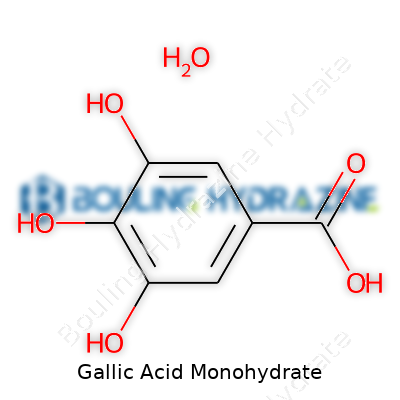
Gallic acid monohydrate comes across as distinctive even on first glance. It usually appears as a fine, almost snow-like powder, dissolves smoothly in water, and gives off its mildly sour taste and astringent note. Behind that simple appearance lies a phenolic structure loaded with three hydroxyl groups clustering around a benzoic acid backbone. This molecular setup gives it a knack for grabbing metal ions or neutralizing free radicals. Unlike piles of industrial compounds, gallic acid’s chemical character leaves it useful for more than just scientific puzzles; it naturally grabs attention, mainly because researchers, winemakers, and even artisans continue to rely on these properties.
Every industry demands a certain standard, but for gallic acid monohydrate, figures mean much more than labels. Reliable analysis counts on purity, and meaningful results need precise measurements. The market and clinical use both watch for strict criteria, including content percentages, clarity, and heavy metals. Regulatory structures from agencies like the European Food Safety Authority or the US Pharmacopeia keep watch, providing checkpoints from production stage to store shelves. That level of scrutiny means no shortcuts make it to the final user, whether for pharmaceutical products, quality control in food production, or laboratory protocols.
Factories and research labs continue drawing gallic acid monohydrate from sources like gallnuts, tea leaves, and the bark of some trees. The current favorite route hydrolyzes tannic acid, isolating gallic acid using acids or enzymes and separating it by crystallization. These procedures sound familiar, but tweaks in conditions, purification steps, or solvent use can shift the yield significantly. Advances in enzyme biotechnology add another route, involving less aggressive conditions and less environmental mess. As someone who likes to connect process details with real outcomes, I see that while traditional extraction still holds value, modern bioprocessing unlocks new possibilities for cleaner and more sustainable production.
The chemical personality of gallic acid monohydrate doesn’t stop at being a phenolic acid. It enters all sorts of reaction territory: forming esters, fooling around with metal ions, and coupling under oxidative conditions. When chemists talk about modifying this acid, they’ll mention methylation, acetylation, and even polymerization. These reactions don’t just expand the chemistry set—they open doors for drug development, nanotechnology, and food chemistry. For antioxidants, no small feat comes from attaching gallic acid to other molecules. The ability to tinker with the core gives scientists options to fine-tune solubility, bioavailability, or binding specificity.
Few substances carry so many names. Gallic acid monohydrate masquerades under synonyms in the literature: 3,4,5-trihydroxybenzoic acid, tannic acid breakdown product, C7H6O5·H2O, or even its shorthand as a phenolic acid. This many labels trip up even the sharpest reader unless you remember that the basics remain the same despite new branding or scientific phrasing. The flip side shows its reach: from pharmacology texts to industrial handbooks, the name might change but the backbone stays unchanged.
Safety isn’t just a checklist for chemists or industrial workers. With gallic acid monohydrate, shops and factories pay close attention. Handling and storage procedures, like using gloves and goggles, keep unnecessary accidents away. On the regulatory front, safety guidelines draw roots from years of toxicological study, where even a naturally sourced compound like this gets a full workup for possible risks. Improper storage can spoil a batch, and careless disposal damages both profit and planet. Experience says a good system around labeling, storing, and training beats damage control any day.
Gallic acid monohydrate doesn’t cling to one narrow application. Analysts check wine tannin content using its chemistry. Medical researchers consider it for anticancer or antiviral activities, thanks to its robust antioxidant profile. Traditional dye producers, ink manufacturers, and even the beauty industry pull from its properties to solve practical challenges. Even now, I bump into mentions in patents for new drug carriers, food preservatives, or anti-corrosion agents. Such flexibility comes from the combination of a strong safety record, broad reactivity, and clear structure.
Academic teams and industrial labs keep finding reasons to return to gallic acid monohydrate. Research articles churn out new uses: think nanoparticle stabilizers, polymer precursors, or new blends for antioxidant protection. Those who track food science spot investigations into shelf-life extension, while pharmacology banks on the potential for new drugs targeting oxidative stress pathways. The stream of peer-reviewed results helps build confidence in new directions, and while the market craves flashy innovation, the echo of old compounds in new forms suggests reliability in every discovery.
No matter how healthy something sounds, toxicity questions always creep in. For gallic acid monohydrate, the record looks solid—animal studies and limited human data point to low acute toxicity. Some effects pop up at high doses, including stomach irritation or metabolic disturbances in animal experiments. None of that erases the need to watch exposure carefully, especially for workers and anyone considering high-dose supplements. Ongoing monitoring and updating guidelines protect more than just product reputation—they build real-world trust for industry and consumer alike.
Gallic acid monohydrate isn’t likely to disappear or stagnate. Green chemistry, demand for clean-label antioxidants, and the growth of sustainable manufacturing all shine a new light on compounds previously seen as simple byproducts. I see more research focusing on building new derivatives, finding niche biomedical applications, or tightening up production processes with an eye on energy conservation and waste management. The intersection of tradition, modern science, and practicality makes this compound’s future worth keeping an eye on, especially for anyone who values both old knowledge and new innovation.
Most people don’t give a second thought to the fine white powder known as gallic acid monohydrate. It hides in the background, but it touches more lives than you might expect. Folks who work in labs know this compound as a reliable antioxidant and a staple in chemical research. Still, its story reaches beyond sterile benches and glass jars. At its core, gallic acid comes from plants—the humble oak tree, green tea leaves, grapes, berries, and other foods we eat without thinking much about what’s inside.
Doctors and researchers often look to gallic acid for its ability to fight off unwanted reactions. Foods tend to spoil and change color, especially when air gets involved. Manufacturers started using gallic acid to slow down this process, extending the shelf life of many things we eat. Natural antioxidants like this appeal to anyone worried about synthetic preservatives in nutrition. Looking at the data from nutrition studies, diets high in plant compounds like gallic acid can help reduce the risk of chronic conditions, including heart disease and some cancers.
Pharmaceutical companies keep their eyes on gallic acid, too. This compound supports research into how nature-based products can head off health problems at their roots. Lab results show gallic acid fights inflammation and helps defend cells from damage. These findings encourage the study of plant-based therapies in medicine. It’s fascinating to see a simple substance play such a meaningful role in cutting-edge cancer and neurodegenerative disease research.
Gallic acid monohydrate doesn’t sit on store shelves for the everyday shopper. Chemists employ it behind the scenes as a standard in labs. Its known properties help test the quality of other substances. For example, wine and tea producers use it to measure the level of tannins and antioxidants. Reliable quality control often starts with a compound like this, making sure that what’s in the bottle matches what’s expected.
Some of my closest friends work in botany and agriculture, and they see value in this molecule for a different reason. It helps distinguish between plant varieties by analyzing chemical fingerprints. A little powdered gallic acid connects daily farming to advanced science. That link helps breeders and growers make better choices for crops and food security.
Environmental chemists also call on gallic acid when they want to track pollutants. It acts as a marker or reagent, offering a sensitive way to measure the presence of certain metals and toxins. That’s something I respect deeply. It’s not just about knowing what people put into their bodies but also what comes out into the world.
The textile and ink industries borrow this compound from nature, too. It played a role in traditional ink recipes for centuries. Today, environmentally focused companies look to these roots as they design sustainable dyes and printing materials. Even art conservators rely on gallic acid to analyze and restore old manuscripts.
Few people recognize gallic acid monohydrate’s reach or realize how often they cross paths with its work. Researchers continue to unlock new uses and benefits, showing that nature’s chemistry cabinet holds more promise than synthetic shortcuts. Real progress often grows from applying old wisdom to modern challenges—sometimes by studying the simplest substances.
Supermarkets stock plenty of foods fortified with antioxidants, and gallic acid monohydrate sits quietly among them. Often seen in the ingredient list for processed foods, supplements, teas, and even wine, this naturally occurring compound has attracted plenty of questions about its safety. Some critics spring up each time another food additive makes headlines, but gallic acid monohydrate tends to spark curiosity rather than panic. At a glance, it’s not an unfamiliar chemical—gallic acid forms as plants break down tannins, and its monohydrate version appears once it absorbs a single water molecule. Science types might spot it in oak bark, grapes, or berries. What does all this really mean for safe eating?
I’ve relied on research and common sense when evaluating food safety. Every time I pick up a product with a name that sounds more at home in a chemistry lab than a kitchen, my first question leans toward: “What’s the real risk?” Groups like the Food and Drug Administration and the European Food Safety Authority carefully weigh that same question with far more data. Gallic acid monohydrate sits on regulatory clearance lists around the world, including those in the United States, Europe, and parts of Asia, because experts have tested it under plenty of scenarios. These agencies run toxicology studies, assess how our bodies break it down, and set exposure limits based on evidence, not hype.
Researchers zero in on two things: accumulation and toxicity. Studies show our bodies process and excrete gallic acid monohydrate without drama when consumed through regular diets. This compound doesn’t tend to build up or turn into something dangerous during digestion. In fact, the antioxidant properties give foods a bit of a health boost, supporting cells when they take hits from pollution or stress. Plant-based diets rich in fruits, teas, and nuts deliver a fair dose of gallic acid. Populations eating these foods have solid health statistics, and their regular exposure over hundreds of years tells a story you can’t ignore.
Toxicity trials show that realistic food-based levels don’t come close to the danger zone, even in animal experiments. Large, concentrated doses—far beyond what a snack or salad could provide—might cause digestive upset, but most people would never consume enough to worry about these effects.
Safety isn’t just the absence of harm in lab animals. Clear, honest labeling strengthens public trust. Every shopper deserves a peek behind the curtain to see what goes into their bodies. Labeling laws help with that, giving people a choice if they’re worried about allergies or want to stick to ingredients they recognize. If a rare reaction does pop up, clear records make it easier to understand what happened. Governments and NGOs urge manufacturers not to hide behind vague terms; “gallic acid monohydrate” needs to stay on packaging as a sign of accountability.
Food science doesn’t stand still, and new technologies sometimes uncover risks that old studies missed. Academic journals continue to publish reviews and occasional case studies on gallic acid and its derivatives. This ongoing scrutiny helps experts catch any trends or issues early. Healthcare providers keep tabs on reported side effects, guiding consumers who use supplements or try diets heavy on single plant extracts. I’ve learned over the years that keeping lines open between scientists, regulatory bodies, and the public stops misinformation from gaining ground.
In today’s world of complex food supply chains, it’s easy to get wary about what we’re eating. Gallic acid monohydrate stands as a good example of how science, transparency, and history combine to keep food safe. If concerns about additives or natural chemical compounds crop up, looking at reliable studies and honest product labels points the way forward.
Lots of people hear “Gallic Acid Monohydrate” and think of a sterile lab or a chemistry class. But long before it makes an appearance in textbooks or labs, gallic acid comes straight from plants – think acorns, tea leaves, and oak bark. The trick lies in keeping it as fresh as those dry leaves in a tin. So, how long before it loses its punch?
Heat, air, and moisture seem like the enemies of almost every chemical, but they hit gallic acid even harder. At home, a canister of tea can stay fragrant for a year if you store it right – dry, sealed, and away from sunlight. The powdered form of gallic acid shares those same worries. A cool, dark spot with low humidity stretches its shelf life. Stack those jars in a sunny, damp room, and you’ll see them clump and change color quicker than you’d expect.
In most commercial settings, warehouses rely on airtight packaging and climate controls. A dry, cool environment below 25°C gives gallic acid its best shot at lasting a couple of years. Toss the original packaging and scoop it out with damp spoons, though, and that’s flirting with rapid breakdown. Based on experience with similar plant-derived chemicals, an unopened, well-stored container often keeps for two or three years, sometimes longer. Open it, and the clock speeds up.
The science behind why matters. Gallic acid comes with a single water molecule attached. That small detail makes it sensitive to changes in humidity and temperature. Over time, the water can evaporate or react with the air, slowly shifting the chemical makeup. Signs of trouble include unexpected clumps, brown spots, and a loss of its bright white color. A faint sour smell sometimes lingers if the acid has started to degrade.
Old powder might not land anyone in the hospital, but it loses the qualities that researchers and manufacturers care about. For folks in a lab, that means their experiments could start failing for no clear reason. Add stale gallic acid to a recipe or supplement, and the dose becomes anyone’s guess.
Back in university, I watched a professor toss out a whole batch of gallic acid after a humidity spike in the chemical store. We checked the lab notebooks to make sure no bad data slipped through—nobody wanted to publish results based on a degraded sample. The lesson was clear: the calendar only tells part of the story. Storage conditions and how often a container gets opened can matter more than the printed expiry date.
Pharmaceutical and supplement companies tend to test ingredients long before they hit expiration. Good labs check for color, texture, and weight changes. Some even test batches before use, just to be sure. In research, we learned that trusting old chemicals cost time and money. Everyone benefitted more from opening fresh jars than betting on the contents of a faded label.
No fancy tricks are required. Seal it tight. Keep it where sunlight can’t reach. Use clean, dry tools each time. Date the jar when opening and keep an eye out for changes. If it clumps or changes color, consider swapping it out. It saves headaches and, for something as central to research as gallic acid monohydrate, keeps science honest.
Gallic acid monohydrate sounds fancy, but it’s just another chemical with a bit of water folded into its structure. Folks working in labs, schools, or even some food or pharma setups might run into it. Usually, this compound helps out with things like antioxidant research or quality checks. The question many have after the order slips through the door: where should we tuck away these pale crystals?
Anyone who’s dumped flour into a canister knows moisture and powder don’t get along. The extra water in gallic acid monohydrate attracts even more from the air. You pop open the jar on a humid day and, before long, clumps start to form, and the powder refuses to pour cleanly. It’s not just annoying; clumps signal changes in purity and sometimes make measurements go off track.
I’ve seen too many labs ignore this lesson. Leaving the bottle on a warm shelf beside the coffee machine, lids left loose, and before you know it, they’re fighting to scrape out enough for a test. Chemicals thrive on routine, not laziness.
Light might not seem like a big deal for a jar of white powder, but over days or weeks, light can stir up degradation, especially if it’s direct sunlight. High temperatures help, too—not by preserving powder, but by speeding up chemical changes we’d rather avoid. High heat can also cause the powder to lose that extra water molecule, shifting its weight and, in serious research, wrecking hours of careful calculations.
Practical storage means a screw-top container, sturdy and well-labeled, with a tight seal. Most experienced chemists use glass bottles or polyethylene jars for a reason. Cabinets that stay dry and cool beat the open bench every day. Refrigerators work, but frost-free models can swing through humidity cycles and cause more problems unless you stay alert about condensation.
Desiccators, those humidity-free boxes filled with drying balls or chemicals, offer peace of mind. I’ve found them priceless for keeping sensitive chemicals in good shape. Even a small packet of silica gel tossed in the jar can make a difference.
Scooping out just enough for each job cuts down the risk of exposing the main supply to moisture. Nobody wants to discover spoiled stock halfway into a critical run. If you handle bulk items, splitting your purchase into small jars means only opening what’s truly needed—no battle against air and humidity each time.
Making sure chemical supplies like gallic acid monohydrate stay pure and dry may sound small, but it protects both the results coming out of labs and the safety of anyone working nearby. Contaminated or degraded supplies waste money, materials, and time. Worse, they can throw off research or product batches downstream—problems that nobody wants to chase after.
Safeguarding purity starts with respect for the shelf, not just what happens at the lab bench.
Gallic acid monohydrate isn’t the kind of ingredient most people think about. For those of us who work in labs or handle chemical supplies, though, its purity ends up being a real-world concern. No one wants to spend hours on a reaction or quantification, only to discover the gallic acid had impurities and ruined the data.
Most reputable suppliers will list a minimum purity of 99% or better for gallic acid monohydrate. Anything less starts raising alarms, especially if the acid finds its way into analytical techniques like HPLC, or if it’s headed into pharmaceutical or food applications. Even trace metal content gets scrutinized—there are times when labs run extra metal checks because a little bit of iron or copper can mess up sensitive biology or chemistry.
The monohydrate version—the one with a crystal water molecule—shows up in natural sources, like gallnuts or sumac, but even plant-derived acids can carry stuff you don’t want. Pesticides, leftover plant proteins, or something as subtle as ash content can boom up the weight and fool the unwary. That’s why reputable certificates of analysis spell out not only gallic acid percentage but also loss on drying, residue on ignition, and chloride or sulfate levels. If the figures drift too high, the batch winds up below spec.
I remember working on an antioxidant analysis, expecting clean figures. Results slammed to a halt when the test solution stayed cloudy even after multiple filtrations. It turned out the gallic acid had come with excess ash. From then on, I got in the habit of checking that each batch met the 99% mark and kept the contaminants below prescribed thresholds. Small deviations create headaches. If the acid’s used to calibrate instruments, impure standards throw every future measurement out of whack. And if you’re checking food for phenolic content, the error margin can lead to flawed nutrition claims or incorrect shelf-life predictions.
In pharmaceutical use, any ingredient with the gallic acid label ought to clear strict controls—USP, EP, and JP compendia spell out what purity means. These standards usually demand less than 0.5% on residue on ignition and less than 0.1% on loss on drying. Without these controls, companies risk regulatory fines or product recalls, which hit reputation and wallet.
Markets demand cleaner acids year after year. Modern chemical manufacturing uses multiple recrystallization steps, activated carbon treatments, and heavy metal screening. Reputable producers test for lead and arsenic down to fractions of a part per million. Why? Because customers want traceability and suppliers don’t want to gamble with someone’s data, a product launch, or a regulatory agency breathing down their neck.
Purity isn’t just a checkbox—it's the difference between reliable science and wasted time or money. Open, clear reporting from suppliers, backed by routine audits from buyers, keeps everyone in line. Real progress comes when companies voluntarily publish batch test results online, let buyers trace the exact assay, and flag any deviation the moment it occurs. That level of transparency does more to protect health and science than any marketing slogan.
Gallic acid monohydrate may not headline the daily news, but the next time you see a clean chromatogram, a consistent supplement, or an approved pharmaceutical, thank the unseen work that went into making sure this chemical met and kept its purity promises.

Providing high-quality chemical products and logistics solutions for global trade partners.



