
Decades ago, chemists turned their focus toward aromatic ketones, hunting for compounds that brought more uses than the familiar acetophenones. Isobutyrophenone didn’t make a splash at first, sticking around in lab notebooks and chemical catalogs. Its development mirrors so many discoveries from that era—you start with curiosity, you find a few handy shortcuts to a certain ketone, then you hand it off to industry and watch it ripple outward. Back then, folks needed new building blocks for custom-made molecules and tailored reactions. Isobutyrophenone caught some early interest for its promise in synthesis and as a reference point for structure-activity research across the flavors, fragrances, and pharmaceutical fields. Over time, as analytical tools improved, so did the documentation and cataloging of isobutyrophenone’s distinct profile.
In the lab, isobutyrophenone stands out for its clean, sweet aroma—a little like almonds mixed with a faint fruity tinge. This colorless liquid doesn’t grab attention initially, but pour a little onto a cloth and its scent speaks for itself. It’s heavier and denser than water, sporting a boiling point a little north of other simple ketones. Chemically, it’s a member of the aromatic ketone family, built from a phenyl ring and an isobutyl side chain. This simple frame gives it just enough reactivity to keep researchers interested, but not so much it becomes unpredictable. In my experience, handling isobutyrophenone feels straightforward, as it doesn’t fume or irritate as quickly as some cousins in its chemical class. Most chemists recognize it by its stability and utility, fitting right in alongside aldehydes and longer-chain ketones in any synthesis toolkit.
Regulators and buyers rely on precise technical specs in this industry. Chemists expect a purity well above ninety-eight percent if they’re going to use it for precise applications, as trace contaminants can throw off a reaction or cause unwanted side effects in end products. Labels sometimes refer to it as “2-Methyl-1-phenylpropan-1-one,” its old-school IUPAC name, but “isobutyrophenone” or “alpha,alpha-dimethylpropiophenone” pop up just as often. Physically, the standard product arrives in opaque bottles, sporting a faint, oily sheen if you hold it to the light. Its density lands close to 0.98 g/cm³ and its refractive index is easy to pick out on most analytic charts. On the legal and regulatory side, most suppliers lean into setting robust guidelines on storage—preferably in cool, dry environments and away from strong oxidizers—to keep shipments safe and compliant.
The classic method for making isobutyrophenone involves a Friedel-Crafts acylation. This accomplishes two things: it attaches an isobutyryl group to benzene and lays the foundation for a host of downstream analogues. Over the years, tweaks have targeted yield and environmental impact. Lab stories often mention how early runs generated unnecessary byproducts. Switches in catalyst, adjusted reaction times, and strategic selection of solvents have streamlined the process. As environmental guidelines get stricter, process chemists look for ways to recycle reagents or minimize volatile emissions. It's not always easy, but tightening up the preparation means less waste and cleaner output—a real concern in crowded labs where waste management matters both ethically and financially.
Isobutyrophenone stands as a nearly textbook example of what a chemist does when handed a versatile carbonyl. Its methyl groups on the alpha carbon open the door for selective oxidation, reduction, or even rearrangement. The classic reduction with sodium borohydride yields a secondary alcohol, perfect for diving into further esterification or etherification. Halogenation, especially at the benzylic position, unlocks new intermediates for drug development and fragrance synthesis. These aren’t just theoretical paths; bench chemists have tested them and, in the process, learned to tweak reactivity patterns around the molecule’s core skeleton. In practice, modifications give rise to useful dynamism, feeding specialty chemical catalogues and research programs on a global scale.
The tangle of synonyms for isobutyrophenone confuses buyers and even seasoned lab workers now and then. Besides its full chemical name, you’ll find references to “alpha,alpha-dimethylpropiophenone” and “2-methylpropiophenone.” Overlapping uses don’t help much—flavor industry catalogs might call it by its fragrance tag, while academic papers often stick to the more systematic IUPAC standard. This confusion can delay orders or spark the occasional near-miss in cross-checking batch logs. Open communication beats clever labeling every time, especially when moving bulk shipments or sharing data with research partners.
Handle isobutyrophenone with the same care you’d give to any mid-size, organic solvent. Gloves, standard ventilation, and eye protection keep lab teams out of trouble. I learned early the importance of having a clear material safety procedure handy; accidental spills, though uncommon, can cause headaches if left unchecked. Manufacturers follow strict packaging methods to reduce leaks, and waste disposal regulations aim to keep it out of open waterways and landfills. It only takes one close call—a broken bottle in the wrong place—to appreciate why regulations spell out secondary containment and quick cleanup procedures. Long-term exposure studies still catch attention, as the full range of metabolic and environmental impacts draw closer scrutiny from occupational health regulators.
Isobutyrophenone enjoys a niche role in the production of certain pharmaceuticals and fragrances. Its scent profile, though not as dramatic as vanillin or citronellal, provides subtle notes in custom blends. Chemical suppliers lean on it for downstream synthesis, especially for molecules with potential medical or olfactory value. Research labs use it as a model system for studying substitution effects and carbonyl behavior. In teaching labs, I’ve walked students through hands-on modifications of isobutyrophenone, showing how changes to its side chain shape product outcomes in surprising ways. That flexibility translates to creative options in product development and a certain reliability for established industrial processes.
Research and development on isobutyrophenone doesn’t often make headlines, yet the need for better derivatives and synthetic shortcuts keeps it on the radar. Structure-activity studies use it to model related ketones. Organic chemists, always on the lookout for new reactants, reach for isobutyrophenone as a platform for exotic ligand synthesis or for testing transition-metal mediated reactions. Academic publications occasionally report on new analytical methods to track purity or improved safety protocols, driven by institutional compliance and scientific curiosity. With tighter environmental and safety standards, R&D teams work to deliver greener processes and lower energy costs in production. No one wants to get stuck using outdated, expensive methods when competition and regulators keep raising the bar.
No review of isobutyrophenone would be complete without addressing its safety profile and research into toxicity. Animal studies highlight the importance of dose and exposure time, providing data that helps set workplace ceilings and environmental discharge limits. For humans, inhalation and skin contact rarely lead to acute harm, but repeated or high-level exposures could trigger irritation or organ-specific effects that haven’t been fully mapped. Waste disposal enters the conversation yet again, as leftover quantities must steer clear of municipal sewers and landfills. Footing the bill for cleanup after a spill or chronic leak easily outweighs any savings from lax oversight. Anyone operating upstream or downstream of production turns a careful eye toward the latest toxicology reviews and official guidance from environmental agencies.
Future prospects for isobutyrophenone look tightly linked to developments in green chemistry, custom pharmaceutical synthesis, and advanced fragrance formulations. As someone who has seen chemical trends come and go, I expect the main gains to come from cleaner, safer manufacturing and more reliable supply chains. Automation and miniaturized synthesis reactors may simplify batch production and minimize exposure risks. On the product side, the molecule’s aromatic foundation means it will keep popping up in custom organic syntheses, at least until alternatives finally edge it out. The next chapter likely will feature smaller environmental footprints and deeper understanding of both acute and chronic health risks, as industry and academic minds keep sharing findings and challenging each other to do better.
Ask most people about isobutyrophenone, and you’ll get a blank stare. It doesn’t show up in mainstream news or even in most classrooms, but in the research world, this small molecule has quietly supported bigger headlines. Walk into any organic chemistry lab, and odds are, some bottle labeled with its rather plain name sits in a supply cabinet, ready to play a supporting role in chemical synthesis.
I’ve watched isobutyrophenone put to work synthesizing building blocks for things like fragrances and flavors. The cosmetic and perfume industry depends on unique scents that begin with odd-looking chemicals, and isobutyrophenone offers a structure that serves as a launching pad. Some high-value fragrances rely on “notes” that don’t exist in nature—chemists steer compounds like this one through a series of reactions to ultimately craft those synthetic notes that make perfumes stand out.
Pharmaceutical companies eye molecules like isobutyrophenone as starting points too. Chemists often want to modify its structure to yield entirely new compounds that might carry biological activity. I remember a postdoc who spent months tweaking similar molecules, hunting for antiviral properties. Sometimes the search ends up fruitless, but this relentless experimentation lays the foundation for future breakthroughs—and isobutyrophenone lands in the starting lineup because of its accessible structure.
Not every chemical does just one thing well, and that versatility adds long-term value. Isobutyrophenone plays a supporting role in creating more complex molecules by undergoing a mix of chemical reactions, such as condensation, reduction, or even transformations into heterocycles, which show up frequently in medicines and industrial materials. The ability to react in different ways allows chemists to test new paths without switching to a totally new substance all the time.
Practicality matters. If a chemical is stable, safe to handle in standard lab conditions, and reliably sourced, more researchers will turn to it without hesitation. Isobutyrophenone fits this bill, and that keeps it in regular rotation for advanced chemistry students and professionals alike.
The chemical industry faces the same environmental challenges as any modern sector. Reducing waste and minimizing exposure to hazardous compounds forms the core of responsible lab work. Although isobutyrophenone itself doesn’t dominate global headlines for pollution, its production still relies on petroleum feedstocks and established chemical processes that generate some waste. The push for “greener” routes has grown stronger every year; researchers have started testing renewable feedstocks and less energy-intensive methods to prepare starting materials like this one.
Whenever I mentor students, I remind them to look at the full life cycle of their chemicals. Simple steps, like recycling solvents or using catalytic reactions, add up over time. Industry players, too, share the responsibility—adopting green chemistry principles at every stage, from raw material sourcing to end-of-life disposal, can reshape the impact of these overlooked but indispensable compounds.
Successful scientific innovation relies on overlooked workhorses. Isobutyrophenone, with its mix of reliability and flexibility, keeps research moving behind the scenes. Fragrance blenders, pharmaceutical researchers, and lab chemists all benefit from its availability. Its importance reminds us to pay attention to everyday building blocks, not just the bright, shiny discoveries at the finish line. With continued effort toward safe and sustainable production, compounds like isobutyrophenone will keep supporting progress in science and industry for years to come.
Anyone who’s worked in a chemical lab has stories about the day caution almost slipped. Chemicals like isobutyrophenone bring plenty of those moments. This compound looks unassuming, but its risks deserve more than a quick warning label. Safety, in this case, isn’t just a regulatory checkbox—it's the habit that decides whether everyone returns home as healthy as they arrived.
Putting on gloves and goggles might feel ordinary, but not all protective equipment holds up equally. Nitrile gloves do a better job with isobutyrophenone than latex. Splash goggles beat regular safety glasses since this liquid can jump further than you'd guess during a sloppy transfer. A lab coat with fitted cuffs helps keep sleeves from dragging through tampered surfaces or puddles. I’ve seen colleagues learn the hard way after underestimating how easily a solvent can streak through an old cotton T-shirt, especially if they’re rushing a procedure.
The strongest smells often wake up a sense of danger, but isobutyrophenone sneaks up more quietly. Regular fans don’t cut it. Fume hoods aren’t just for show; they attract and remove vapors before anything hits your eyes or lungs. I once set up a reaction on the edge of a hood, thinking just “close enough” would do. Ten minutes later, I noticed my head felt heavy and realized my mistake. Proper ventilation isn’t for clumsy chemists—it’s for everyone who sometimes gets distracted or hurries. Data from the CDC shows that airborne solvent exposure spikes in spaces without localized ventilation. Being lax about hoods invites respiratory trouble faster than most anticipate.
I’ve mopped up my share of isobutyrophenone puddles. Years ago, I learned that paper towels just spread the mess. Absorbent pads and a quick hand with the right chemical neutralizers are your friends. If the spill lands on skin, washing with soap under running water turns a potential problem into a non-event. Peer-reviewed studies on skin absorption point out how fast even small solvent spills can pass through, and once symptoms show, it’s too late for regret. Spills on benches dry slower than expected, and vapors keep drifting upward. This isn’t about panic but about being thorough every time.
No one wants to walk into a storeroom where bottles sweat or tip easily. I always set flammable liquids like isobutyrophenone at eye level or lower, inside snug-fit metal cabinets. Sunlight and heat amplify evaporation and raise the chance for dangerous air mixtures. Some new-to-lab students forget that closed containers can build up pressure on hot days—a few swollen caps and a near-miss with a cracked bottle taught us all to check seals and storage temps before shelving anything.
It pays to keep training current. Lab managers should mix hands-on demos with clear documentation, so the real-life messiness of chemical use doesn’t get lost in bland guidelines. Signs near work stations actually help, especially as reminders for things like swapping out gloves after a splash. In my experience, people forget details, but visual cues jog the right habits. Reporting hazards or close calls—no matter how small—makes everyone safer since silent mistakes don’t protect anyone. Sharing these stories helps pass on practical knowledge that checklists never cover.
Let’s talk about isobutyrophenone. For anyone who’s dealt with aromatic ketones in the lab, this name might pop up on an old reagent shelf, or maybe appeared in the margin of an organic chemistry textbook. I stumbled onto it in a chemistry class during college. At first glance, it sounded forgettable—a background character among celebrities like acetone and benzophenone. Still, the little details of its structure turn out to pack a punch, offering more than just a lesson in naming conventions.
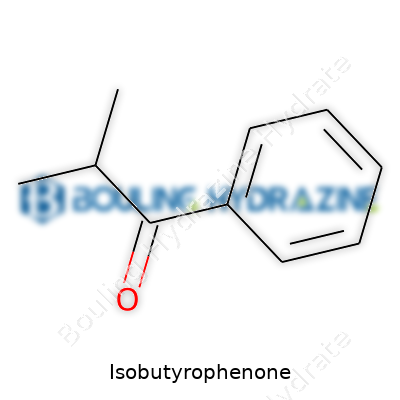
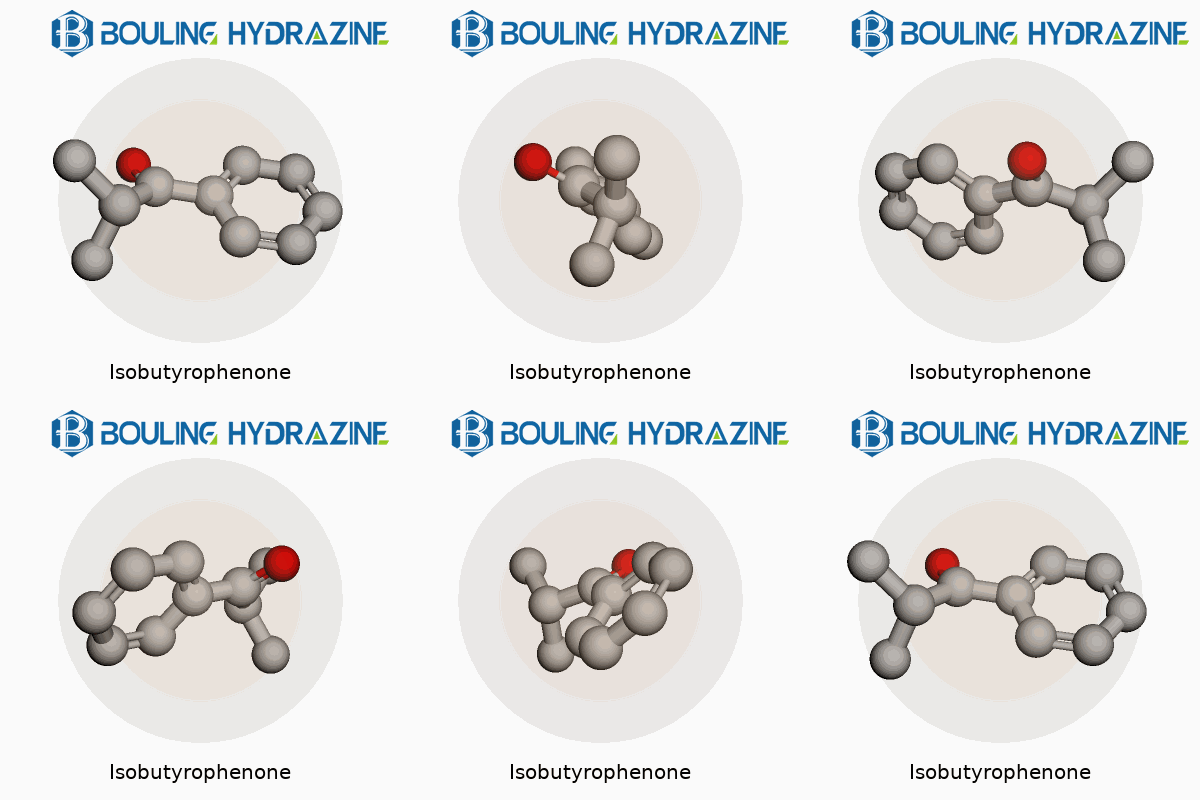
Isobutyrophenone looks simple on paper: the core piece is a benzene ring, that classic hexagonal carbon framework. Hanging off it is a carbonyl group—the defining mark of a ketone. Instead of tagging on an ordinary alkyl group, this one brings in an isobutyl branch. To put it in chemical terms, the IUPAC name is 2-methyl-1-phenylpropan-1-one. Picture a benzene ring bonded to a carbon that forms the start of a short chain—two more carbons long, one of which carries a methyl group poking out to the side. Its formula, C10H12O, gives you the nuts and bolts: ten carbons, a dozen hydrogens, and one oxygen making the whole thing hold together.
I’ve always believed someone should pay more attention to these kinds of molecules. Isobutyrophenone sits in the toolbox of the chemical industry. It gets used as a precursor in various syntheses, meaning it serves as a starting block for making larger and more complicated compounds. In pharmaceutical fields and flavor chemistry, its structure provides the right balance of stability and reactivity. The isobutyl group isn’t just decorative—it changes how the molecule behaves, sets its boiling point, and influences how it interacts with other chemicals.
Having spent some time in an analytical lab, I know how one small tweak in structure can flip a compound’s safety profile or effectiveness. Functional groups, such as that carbonyl in isobutyrophenone, often dictate toxicity or bioactivity. Chemical structure is never just about lines on paper—it lays out the blueprint for how molecules behave in our bodies or in manufacturing plants. Those designing safe industrial processes need deep familiarity with structural details. Isobutyrophenone reminds me how vital it is to look beneath the surface. It challenges chemists to examine how little changes ripple through a system, impacting everything from product quality to worker safety.
After years in the sciences, I appreciate substances like isobutyrophenone more than ever. Small changes in the alkyl branch can make big shifts in chemical behavior. Every time I see this molecule’s name, I remember the importance of understanding what goes into a compound—not just what comes out. Maybe that’s the lesson here: simple structures can have outsized impacts, and paying attention to details isn’t just for tests in school; it’s for real life and real safety in the world of chemistry.
Most folks don’t run into isobutyrophenone on a daily basis. This chemical comes out of labs and factories, usually as a starting point for making other products. Scientists call it an aromatic ketone, and it shows up in some flavors, fragrances, and in the making of pharmaceuticals. On paper, it just looks like another tool in the industrial toolbox. Yet concerns about safety and health risks rise fast once a chemical’s name appears in ingredient lists or storage tanks.
Anyone who’s worked in manufacturing, research, or quality control learns early about the importance of material safety data sheets. Isobutyrophenone doesn’t have the violent reputation of some industrial solvents or pesticides, but it deserves respect. Breathing in its vapor, especially in a confined space, may irritate eyes, nose, and throat. Prolonged or high-level exposure goes further, with headaches or even dizziness reported in some occupational settings. Touching the liquid can leave skin dry or red if contact isn’t washed off quickly.
Regulatory agencies in Europe and the U.S. list isobutyrophenone as an irritant rather than a confirmed toxin or carcinogen. That distinction matters. Without evidence linking it to cancer or organ damage at typical levels, the conversation turns to basic workplace safety policies. Still, manufacturers heed recommendations for gloves, goggles, and good ventilation. Chemical workers learn to take every warning seriously, because thresholds for harm aren’t the same for everyone.
The best way to judge risk involves looking at how much of the chemical ends up in the air and how long someone might interact with it. Most guidance focuses on limiting vapor and skin contact, which are easy steps for trained staff. Accidental spills or chronic exposure from leaks carry more concern. People working with drums or vats of isobutyrophenone rely on ventilation and regular monitoring to keep airborne levels below harmful thresholds laid out by organizations like OSHA or the European Chemicals Agency.
Outside the workplace, exposure drops even further. Consumer goods that use this chemical—such as perfumes or flavorings—ought to contain only miniscule amounts, if any remains after processing. The rules at this stage aim to keep the risk as low as possible, banking on the fact that typical consumers would only ever come near trace levels.
Years spent in industrial settings showed me that most risks stem from poor process control and forgetful handling. Accidental exposure almost always happens when storage policies get ignored or personal protection gear is left in a locker. People get tired, take shortcuts, and chemicals don’t offer any second chances. A little extra time to check ventilation or swap out gloves beats dealing with itchy skin or a trip to the medical bay. Training remains the best bet, because most chemical risks fade when folks know the habits that protect them.
Industry can’t do without chemicals like isobutyrophenone, yet safety shouldn’t come as an afterthought. Proper labeling, clear safety training, and honest risk assessment all matter more than any single regulation on paper. Modern safety standards reflect years of hard-won experience—a chemical like isobutyrophenone only becomes hazardous when manufacturers or workers drop their guard. Transparency about handling, good engineering controls, and unforgiving respect for personal protection lay the groundwork for safe workplaces, protecting both staff and consumers from unnecessary harm.
Sometimes people treat chemicals like background props. They sit on a shelf, almost invisible, until someone needs them. I’ve worked in labs and plants long enough to know how fast things can go sideways. Isobutyrophenone may not sound flashy or hazardous at first mention, but its storage can’t be shrugged off. It’s easy to treat a clear, oily liquid as low-risk, but getting careless invites trouble most folks don’t see until too late.
This compound flows clear with a faintly sweet odor. It serves in fragrance making, organic synthesis, and research settings. But if left out or stored in the wrong spot, it can head down a dangerous path. Isobutyrophenone evaporates, catches fire, and can irritate skin and lungs. Its vapors can sneak up on you, especially in tight or poorly ventilated rooms. Plenty of chemicals bring more risk, but treating any solvent casually feels like asking for an incident.
Let’s cut through the jargon. Warmth boosts vapor production. Direct sunlight speeds up chemical breakdown and can nudge things toward combustion. Fume-filled air tells you enough: you’re breathing what you shouldn’t. Storage in cool, shaded, and dry areas keeps both the chemical and the people safer. In my experience, a heavy metal safety cabinet offers more peace of mind than any warning label. Labeled containers with tight caps don’t just help keep things clean—sometimes that’s the only barrier between a person and an ER visit.
Safe habits don’t develop overnight. I’ve worked in places where someone always left a solvent on a bench, half open. At first, nobody noticed. Over months, a faint smell lingered, and headaches came more often. Once, a dropped lightbulb sparked a tiny fire—luckily stopped before it spread. That’s how fast routine sloppiness can turn into danger. Locking isobutyrophenone away, using containers that resist chemical reaction, and logging use helps everyone breathe a little easier.
No one keeps a safe space alone. In the best labs I worked, someone checked chemical inventories every week. They got questions for any unmarked bottle. The team replaced worn-out labels and wiped up spills, whether a manager watched or not. These habits built a culture where people pointed out mistakes without creating shame, and it meant serious incidents almost never happened. Industry stats back this up: better-trained teams with regular audits report far fewer chemical mishaps.
Not everyone works with a big budget, but basic steps go a long way. Chemicals stored at room temperature, inside certified cabinets, stay stable longer. Flammable storage lockers with clear labels turn any crowded shelf into a safer spot. Keeping moisture low stops some reactions cold. Installing low-cost ventilation fans boosts air turnover, making it much harder for vapors to build up and cause harm. Replacing broken glassware, and making chemical safety talks routine, gives even small outfits a fighting chance at preventing accidents.
Some say fussing over storage slows down work. In reality, safe habits save time and keep people healthy. Factory floors and research labs run smoother when folks know their chemicals get proper respect. Isobutyrophenone belongs in the right place, with the right people watching. That’s not overkill—it’s just plain common sense.

Providing high-quality chemical products and logistics solutions for global trade partners.



